Kalinga Restoration Project
Turning rice husk into durable carbon removal for Indian agriculture.
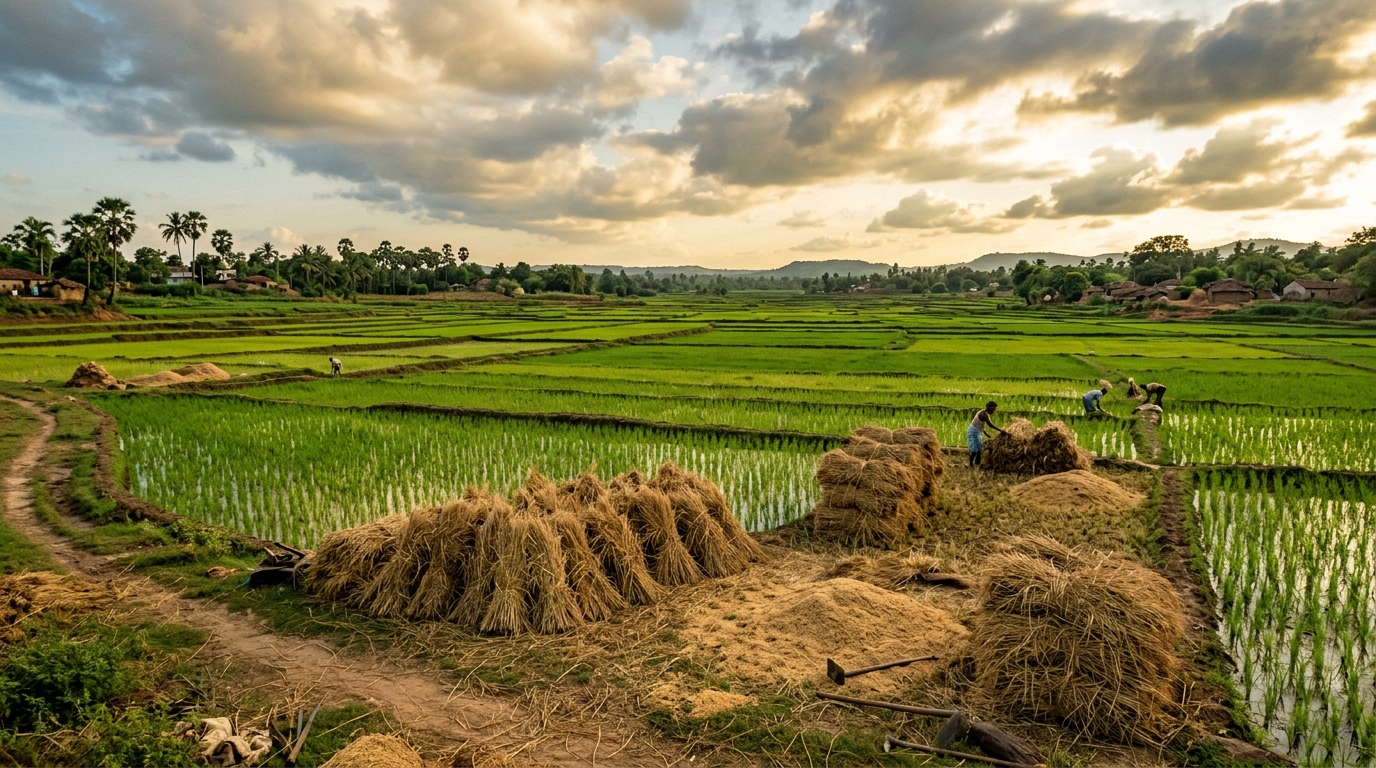
Rice husk is an abundant agricultural residue in Odisha.
We convert it into stable biochar for permanent soil carbon storage.
The Kalinga Restoration Project converts rice husk, an abundant agricultural residue in Odisha, into biochar through controlled pyrolysis. The biochar is then incorporated into agricultural soils, where its stable carbon is designed for long-term storage while supporting soil health and agricultural productivity.
LongStraw maintains comprehensive technical diligence packages for carbon removal procurement desks, institutional investors, and independent diligence rating agencies.
At a glance
Biomass processing capacity across the two operational facilities, equivalent to ~25,000 tonnes/year of agricultural rice husk diverted from burning.
Expected biochar production capacity produced under controlled slow pyrolysis and optimized for soil application.
Expected net carbon removal capacity verified under the Isometric Biochar Storage in Soil Environments Module targeting 200-year durability.
Permanence tier verified under the Isometric Biochar Storage in Soil Environments Module.
MatiBoost™, a biochar-enhanced soil amendment product connecting durable carbon removal directly with smallholder farm soil regeneration across Odisha.
Project Kalinga
Project Kalinga is LongStraw's operational biochar programme in Odisha, India. Technology: controlled pyrolysis. Feedstock: 100% rice husk. Permanence tier: 200-year durability. Operating bases: Kalahandi & Sambalpur. Commercial status: operational (2026).